
This post contains affiliate links. Please see our disclosure policy.
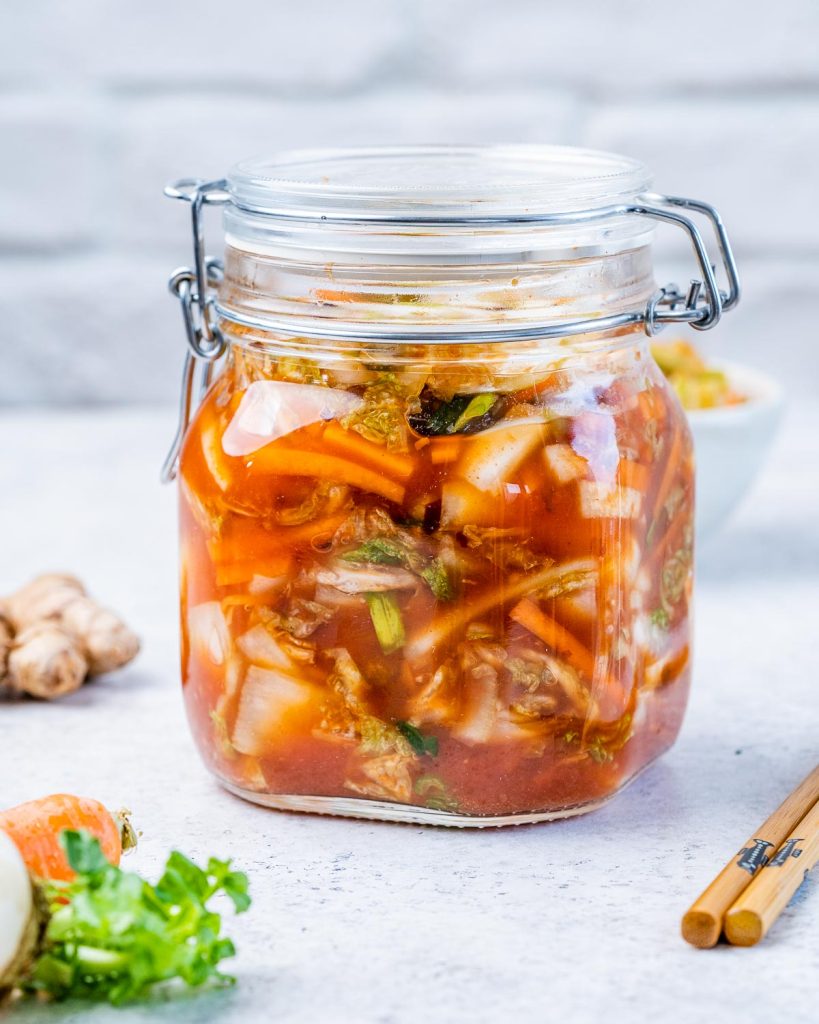
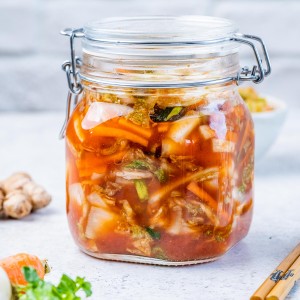
This kimchi recipe is full of fiber and probiotics that are essential for gut health. Learn how to make this incredibly easy recipe for kimchi, that is low in calories and full of flavor, at home!
I love kimchi for both its flavor and nutritional benefits. And as many of you know, I try to make as many recipes at home as I can to improve the quality of ingredients and flavor. I developed this kimchi recipe as a super simple recipe that I could make just like raw sauerkraut, but with way more flavor.
I think it turned out fantastic, and with way less work than a traditional kimchi recipe. Try my kimchi recipe twist and let me know what you think in the comments!
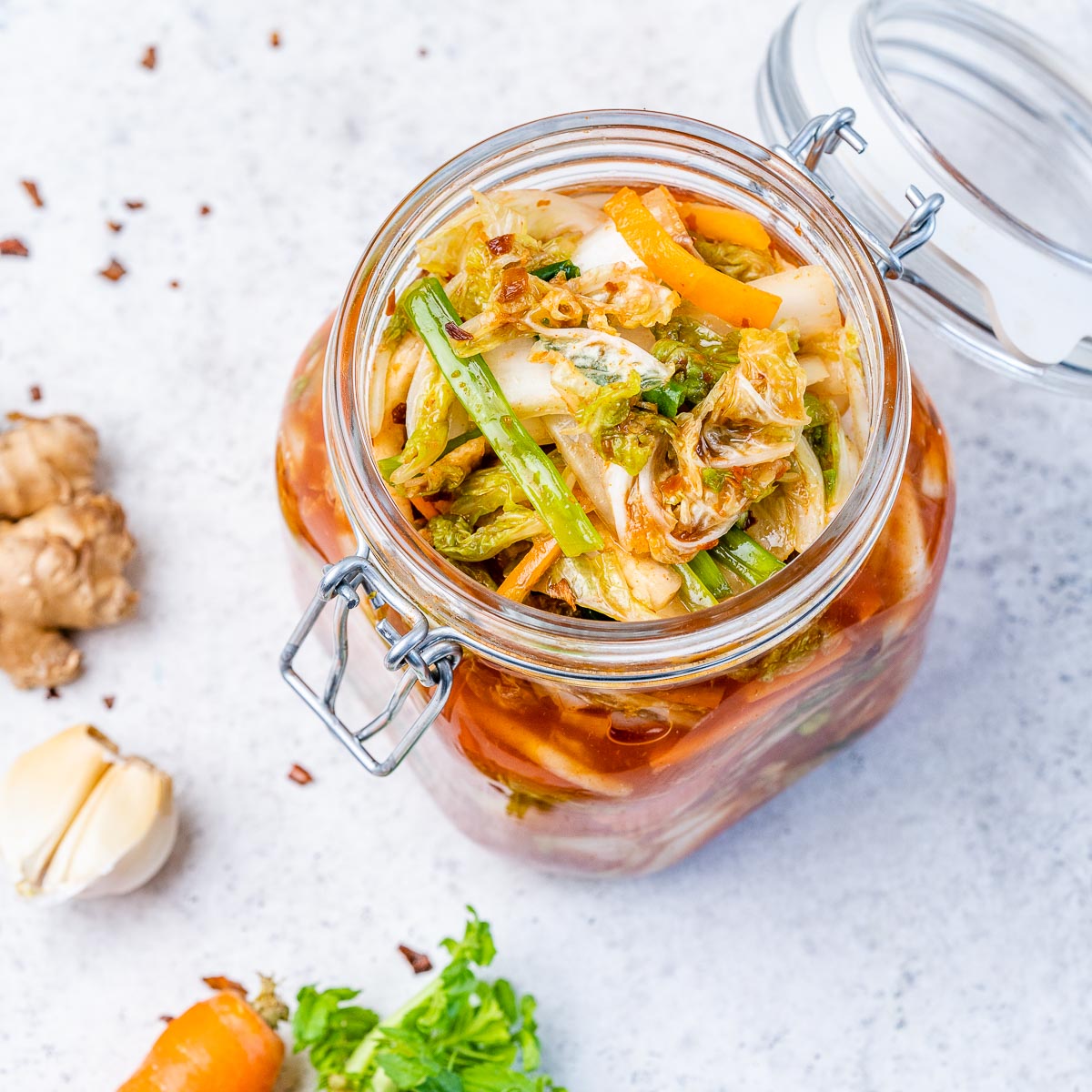
Why you’ll love this recipe
Fermenting food started around 10,000 years ago as a way to preserve food without refrigeration. While I doubt anyone back then was counting on this dish as a nutritional powerhouse, in today’s culture we know how powerful it can be for a healthy gut microbiome. Here are some of the reasons you definitely need to make this recipe!
- Big Flavor: Kimchi is made from fermented vegetables (mostly cabbage) giving it that tangy fermented flavor, but also includes bolder flavors like gochugaru, ginger, and garlic which give it even more punch.
- Packed in Nutrients: The simple process of fermenting turns these kimchi veggies into a gut superfood full of good gut bacteria (like lactobacillus), fiber, vitamins and minerals.
- Low in Calories: You don’t have to worry about calories with this fermented condiment. It is super low in calories, with just 46 per serving. So put it on everything!
- Fantastic for Health: Fermented foods like kimchi offer probiotics that may help prevent or treat things like gastrointestinal symptoms, constipation, the common cold, skin conditions, and more.
Looking for more delicious fermented recipes you can make at home? Then don’t miss out on this raw sauerkraut recipe. For a great non-fermented condiment, try this homemade quick pickles recipe for even more gut health benefits!
What is Kimchi?
Kimchi is a spicy, fermented cabbage, similar to sauerkraut, but with Korean flavors such as garlic, ginger, & chilies. It tastes tangy, salty, spicy, and sour plus it has a little bit of heat!
Health Benefits of Eating Kimchi
Kimchi is packed with nutrients while being low in calories and one of the great things about making homemade kimchi is that you get to control the fermentation, making the kimchi taste how you like.
The fermentation process creates an environment that allows friendly bacteria, called probiotics, to multiply. These natural probiotics are known to offer health benefits when consumed in large quantities.
Fermented foods such as kimchi offer probiotics, which may help prevent and treat several conditions such as:
- Gastrointestinal health
- Constipation
- The common cold
- Skin conditions
- and more!
Reference: Healthline
Ingredients:
The clean ingredients that make this kimchi recipe a great fermented dish to increase your probiotic intake for a healthy microbiome are the following:
Makes about 4 cups, 8 Servings
- 1 medium head Chinese or Napa cabbage
- 8 ozs Korean radish or daikon radish, peeled and cut into matchsticks
- 1/4 cup sea salt
- 2 large carrots, cut into matchsticks
- 4 green onions, sliced diagonally into 1-inch pieces
- 2 Tbsps gochugaru or Korean red pepper flakes
- 1-inch fresh ginger, grated on the microplane
- 1 garlic clove, grated on the microplane
- 1 Tbsp raw honey or pure maple syrup
Variations/ Adaptations
Make it traditional kimchi: Traditional kimchi uses fish sauce as an ingredient. To make this kimchi recipe more like a classic kimchi, you could add 2-3 tablespoons of fish sauce depending on how you like the flavor.
Make it vegan: Instead of using honey, use maple syrup or another vegan sweetener you like.
How To Make This Kimchi Recipe
Trim and discard the outer leaves of your cabbage.
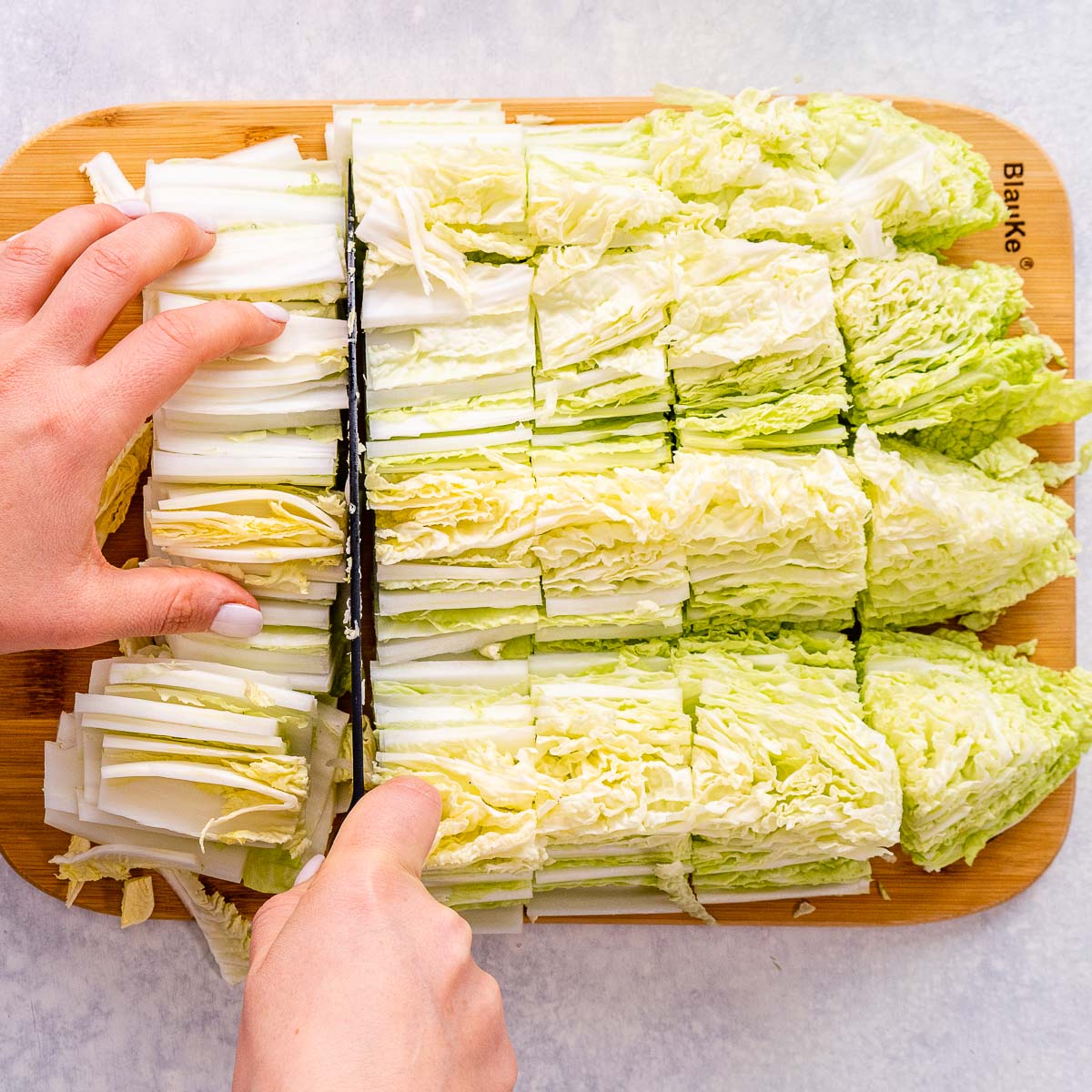
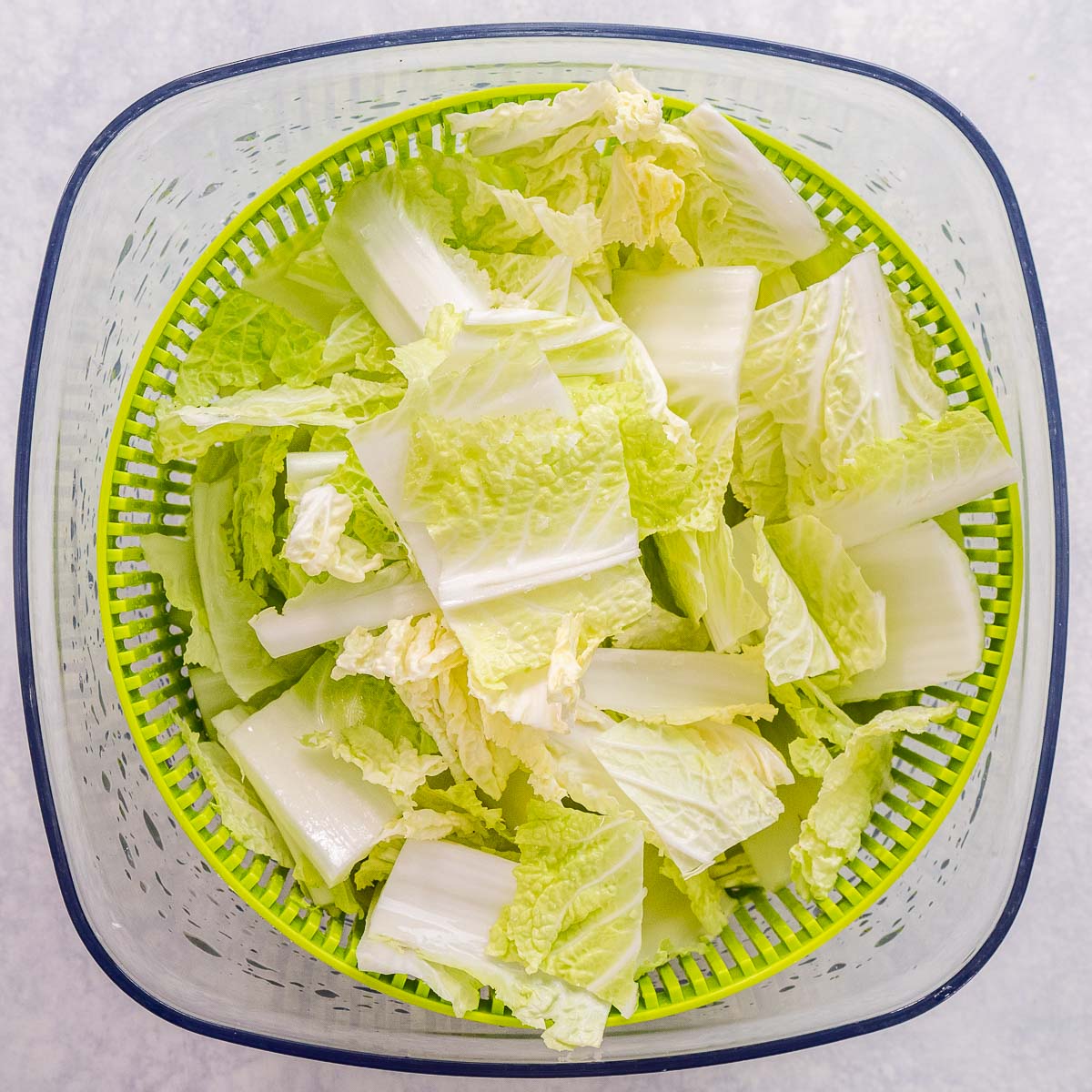
Slice your cabbage lengthwise into quarters and remove the core. Chop it up into large bite-size pieces and place in a salad spinner. Wash and drain the cabbage, then give it a good spin.
Add cabbage to a large bowl then season with 1/4 cup sea salt. Toss well and allow cabbage to sit for about 1 hour, stirring every 15 minutes.
Meanwhile, slice your radishes and carrots into matchsticks and slice the green onions then place in your large bowl.
Add in all of your remaining ingredients.
Add more or less pepper flakes or gochugaru depending on how much spice you like.
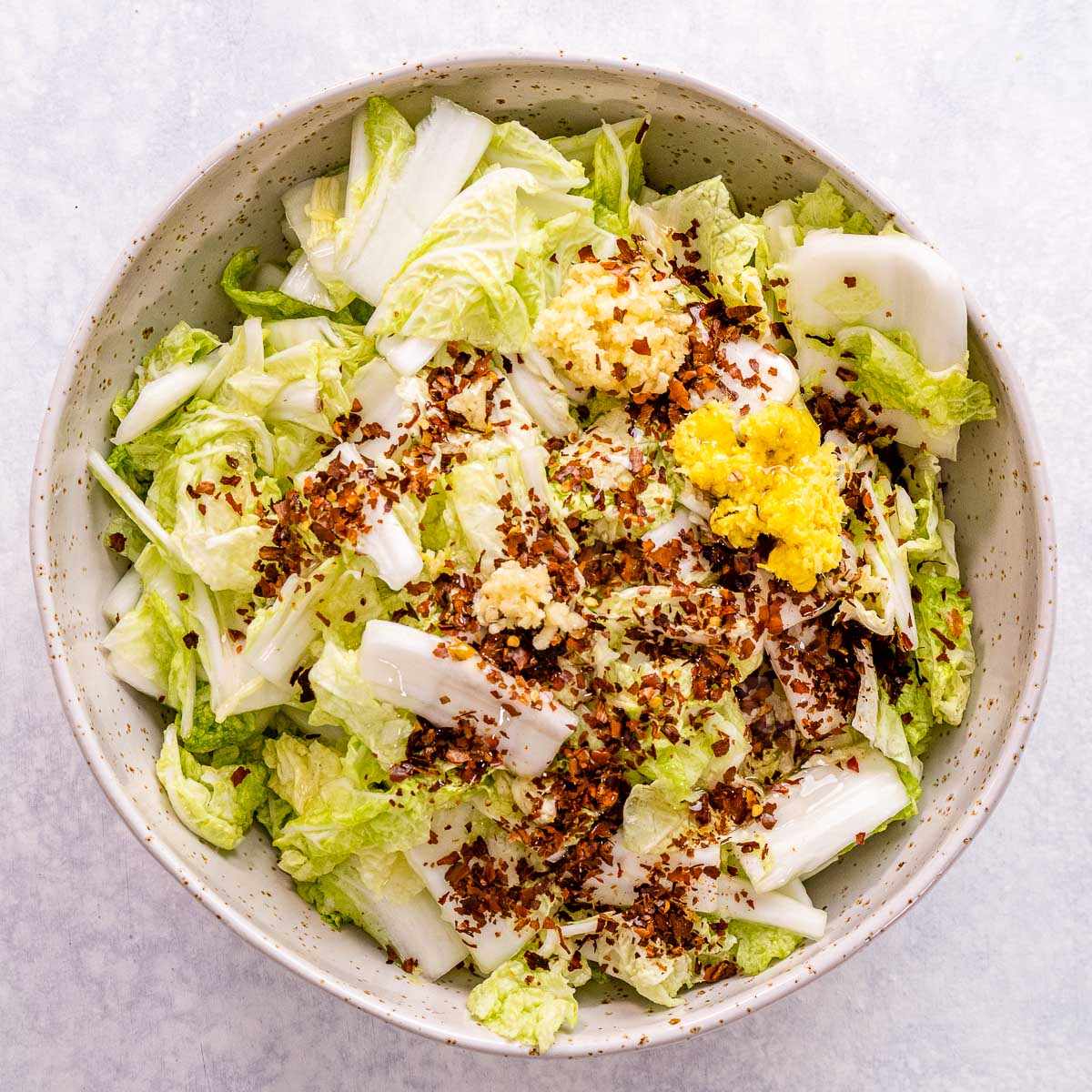
Toss thoroughly to combine. Cover the bowl and allow it to sit at room temp overnight.
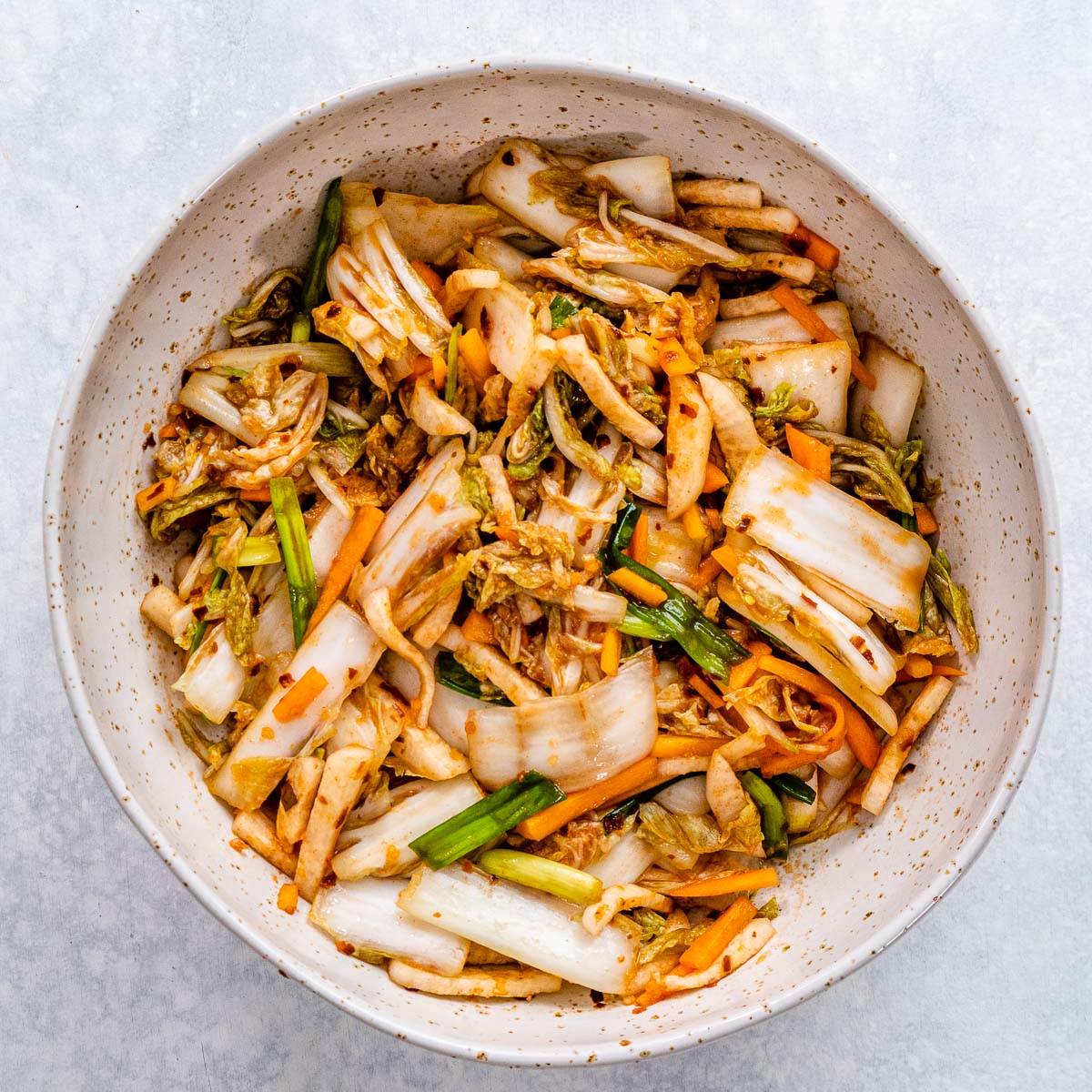
I like to place a plate on top to weigh down the veggies in order to keep them submerged in the brine.
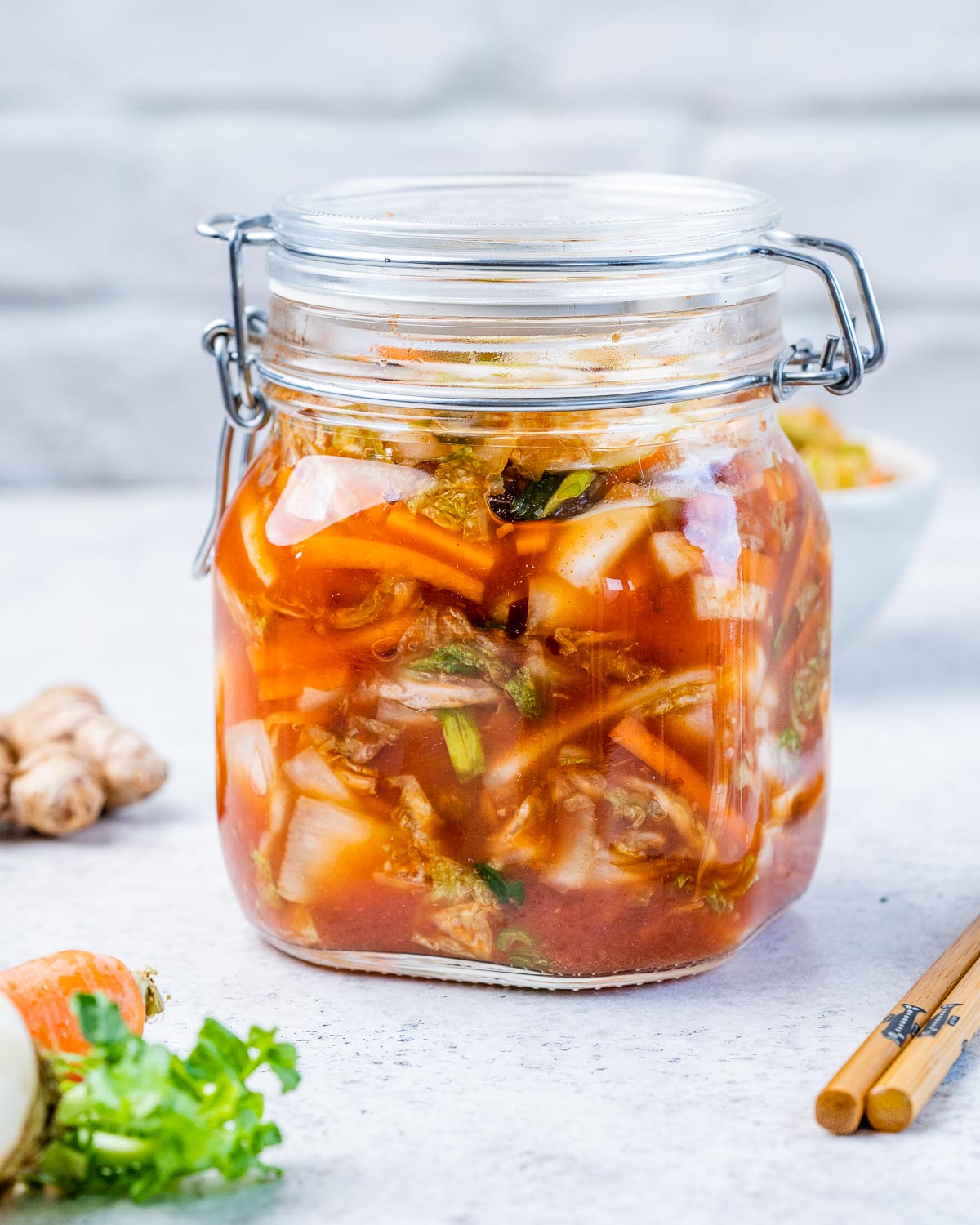
Transfer your kimchi into a clean jar (or several jars) together with all of the brine left at the bottom of the bowl. Keep your fermented vegetables covered/submerged in the brine.
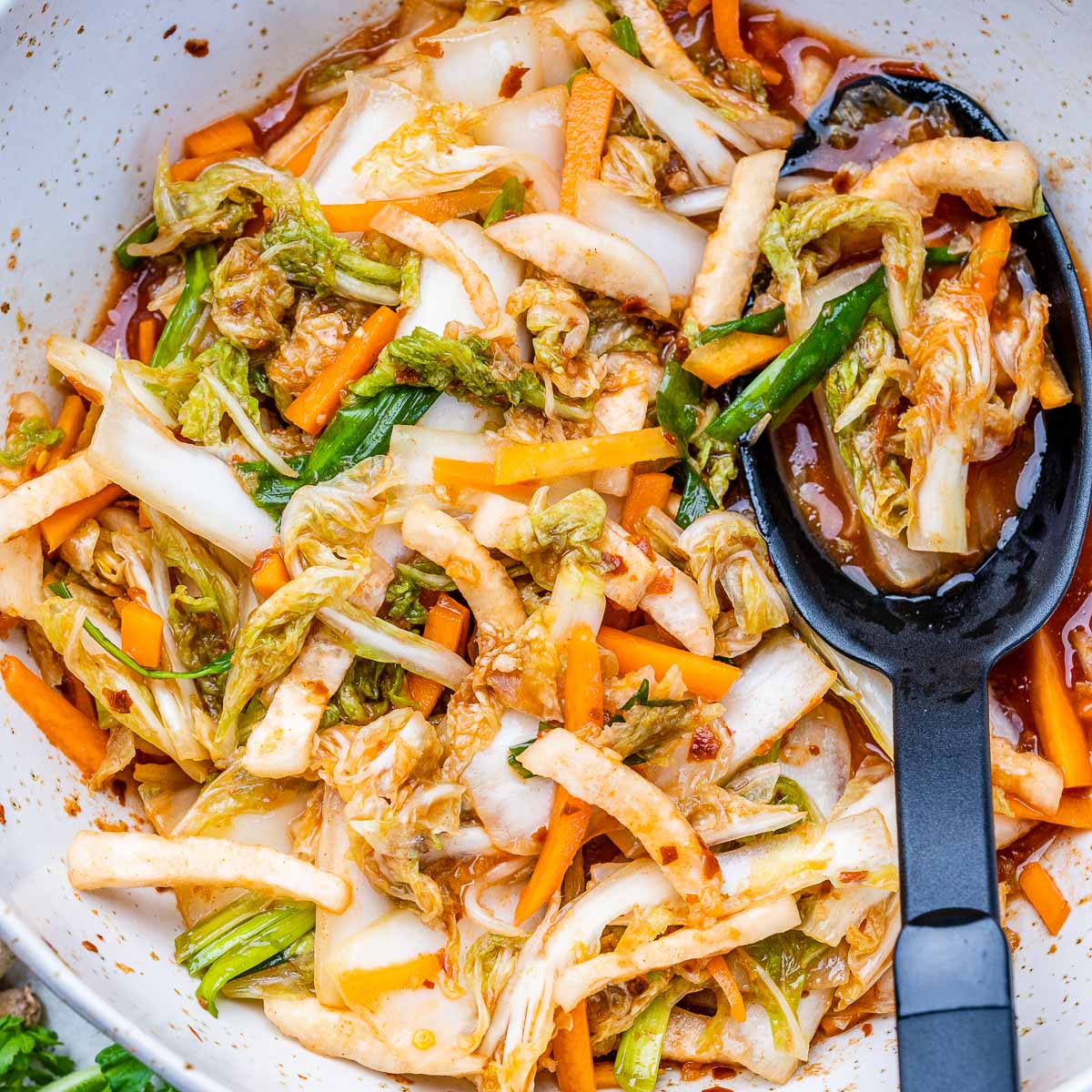
Stays well refrigerated for up to 2 months.
Serve your kimchi with any savory meal from breakfast to dinner.
Enjoy!
❤ Rachel
Rachel’s Tips For Best Results
- Chop your veggies beforehand into bite size pieces for easy eating later!
- Use a salad spinner to get all the extra water out of your cabbage after you wash it.
- Change the spice level by adding more or less chilli pepper flakes.
- Use another bowl and plastic wrap or parchment paper to help weigh the vegetables down and keep them submerged in the liquid while they ferment.
How To Eat Kimchi
Kimchi is one of those delicious condiments that go well with just about everything to add loads of flavor. I personally love having it on fish tacos or these asian grain bowls. But recently I started eating it on my eggs in the morning too! The options are endless. Here are some ideas for how to add kimchi to your meals:
Just about any Asian meal can benefit from the flavors of kimchi. Add it to things like Asian style meal prep bowls, on top of these grilled portobello mushrooms, or try adding it to this cabbage rolls recipe.
One of my absolute favorite ways to eat kimchi is on fish tacos. You can use this fish taco recipe and substitute the mango lime slaw for kimchi!
You can also use it as a huge flavor booster for soups, stews, and even chili recipes. Adding it to this root vegetable and meatball soup will give it a whole new flavor dynamic!
Okay, one more way to try it! With cheesy dishes! There’s just something about the spices in the kimchi mixed with cheese that is delicious. Try adding it to this Cheddar soup instead of the Brussel sprouts or put it in this cheesy zucchini gratin recipe!
Leftover Storage and Reheat Instructions
This fermented kimchi recipe starts out on the counter, but once it has gotten to your ideal flavor it needs to be refrigerated. It will keep in an airtight container in the refrigerator for up to 2 months. Do not freeze this recipe, the results are not great.
Recipe FAQs
Is kimchi spicy?
Yes, kimchi can be spicy. The great part about making kimchi at home is that you can control the spice level. Add more chili flakes for more spice and less for less spice.
Is kimchi healthy?
Kimchi is absolutely healthy! Not only is it full of healthy, whole food vegetables, but it is allowed to ferment to increase the amount of gut-friendly bacteria in it.
Does kimchi go bad?
Like most homemade recipes without preservatives, homemade kimchi can go bad. We recommend keeping it in the refrigerator for up to 2 months. If you notice that it starts to smell different or look cloudy or moldy before that, it should be tossed.
Is kimchi good for you?
Kimchi is good for you since it provides vitamins, minerals, fiber, and probiotics.
Easy Homemade Kimchi
Ingredients
- 1 medium head Chinese or Napa cabbage
- 8 ozs Korean radish or daikon radish, peeled and cut into matchsticks
- 1/4 cup sea salt
- 2 large carrots, cut into matchsticks
- 4 green onions, sliced diagonally into 1-inch pieces
- 2 Tbsps gochugaru or Korean red pepper flakes
- 1- inch fresh ginger, grated on the microplane
- 1 garlic clove, grated on the microplane
- 1 Tbsp raw honey or pure maple syrup
Instructions
- Trim and discard the outer leaves of your cabbage.
- Slice your cabbage lengthwise into quarters and remove the core. Chop it up into large bite-size pieces and place in a salad spinner. Wash and drain the cabbage, then give it a good spin.
- Add cabbage to a large bowl then season with 1/4 cup sea salt. Toss well and allow cabbage to sit for about 1 hour, stirring every 15 minutes.
- Meanwhile, slice your radishes and carrots into matchsticks and slice the green onions then place in your large bowl.
- Add in all of your remaining ingredients.
- Add more or less pepper flakes or gochugaru depending on how much spice you like.
- Toss thoroughly to combine. Cover the bowl and allow it to sit at room temp overnight. I like to place a plate on top to weigh down the veggies in order to keep them submerged in the brine.
- Transfer your kimchi into a clean jar (or several jars) together with all of the brine left at the bottom of the bowl. Keep your fermented vegetables covered/submerged in the brine.
- Stays well refrigerated for up to 2 months.
- Serve your kimchi with any savory meal from breakfast to dinner.
- Enjoy!
Nutrition
Nutrition information is automatically calculated, so should only be used as an approximation.